
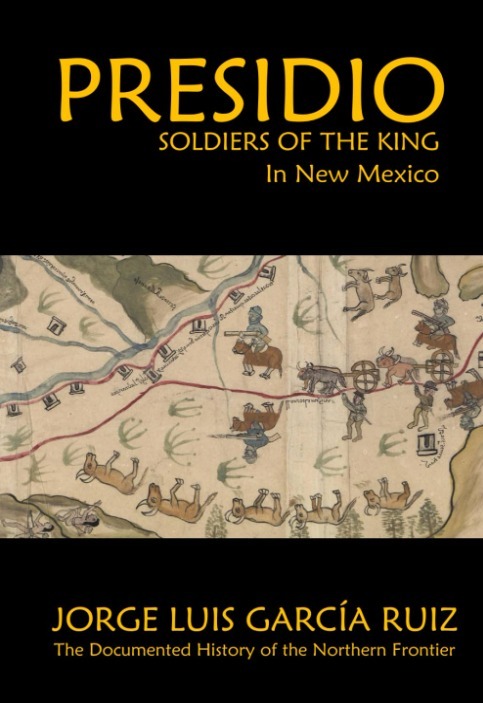
PRESIDIO is the documented History of the northern frontier.
Description
The Spanish presence in the territory that is now the United States of America lasted for three hundred years. The presidio-mission binomial was the cornerstone of its conquest, Christianization, and defense—both against the internal threat posed by the indigenous peoples and the external threat posed by other european powers. Initially, the presidios were established near the missions to provide assistance if needed, despite the fact that the friars never accepted military interference in their establishments.
This policy of missions and presidios was successful in consolidating the territories near Mexico City, but as the expansion moved north and came into contact with less civilized and more aggressive indigenous populations, progress slowed down until it completely halted north of the Rio Grande due to the presence of the Apache.
The Spanish Crown sought to integrate the natives into Hispanic society as its subjects, which required the enactment of numerous laws, regulations, and ordinances, generating a large volume of bureaucratic correspondence.
The creation of this work has been based on original documents primarily from the General Archive of the Nation in Mexico City, the General Archive of the Indies in Seville, and the equally important Franciscan and Jesuit Archives. Practically unknown or unpublished documents about the beginnings of the presidio system have been recovered, diversifying the understanding of its significance in the Hispanicization and Christianization of North America.
PRESIDIO: Soldiers of the King in New Mexico Hardcover – March 21, 2025
by Jorge Luis Garcia Ruiz (Author) ; signed by author